e.g. 500 to 2,000 ha restricted zone
Veterinary office or district authority, Germany
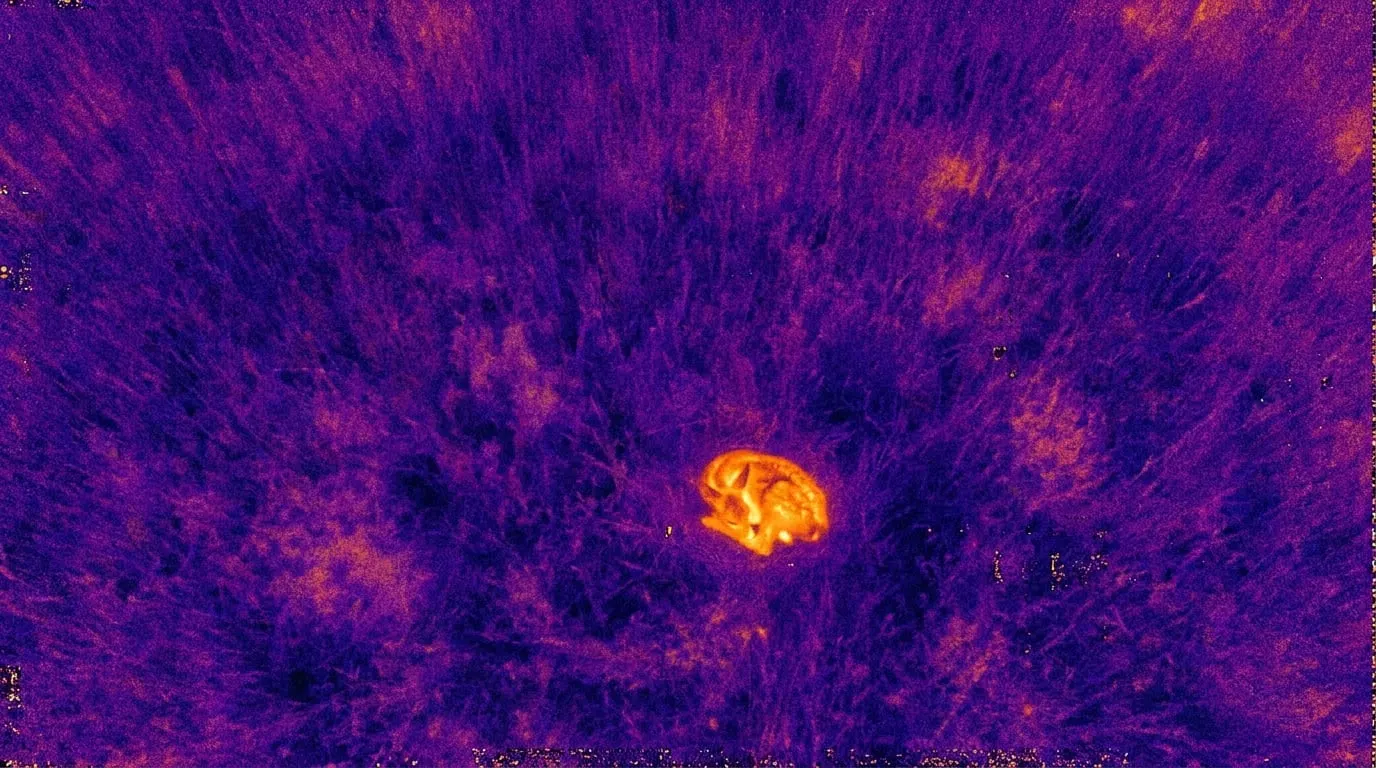
Carcass search with thermal drone and detection dog over several weeks. Finds are located, reported and recovered as instructed by the authority.
S-06 · Field and ground
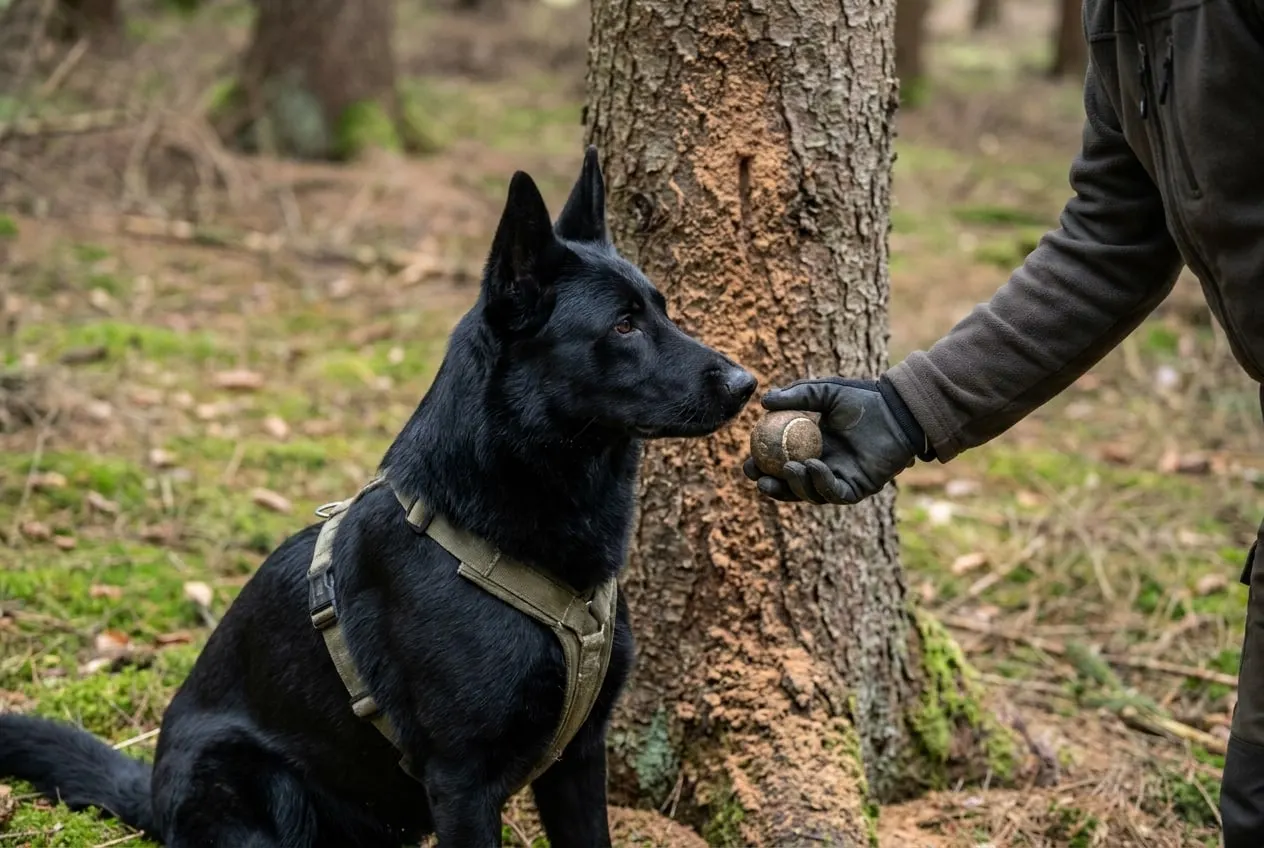
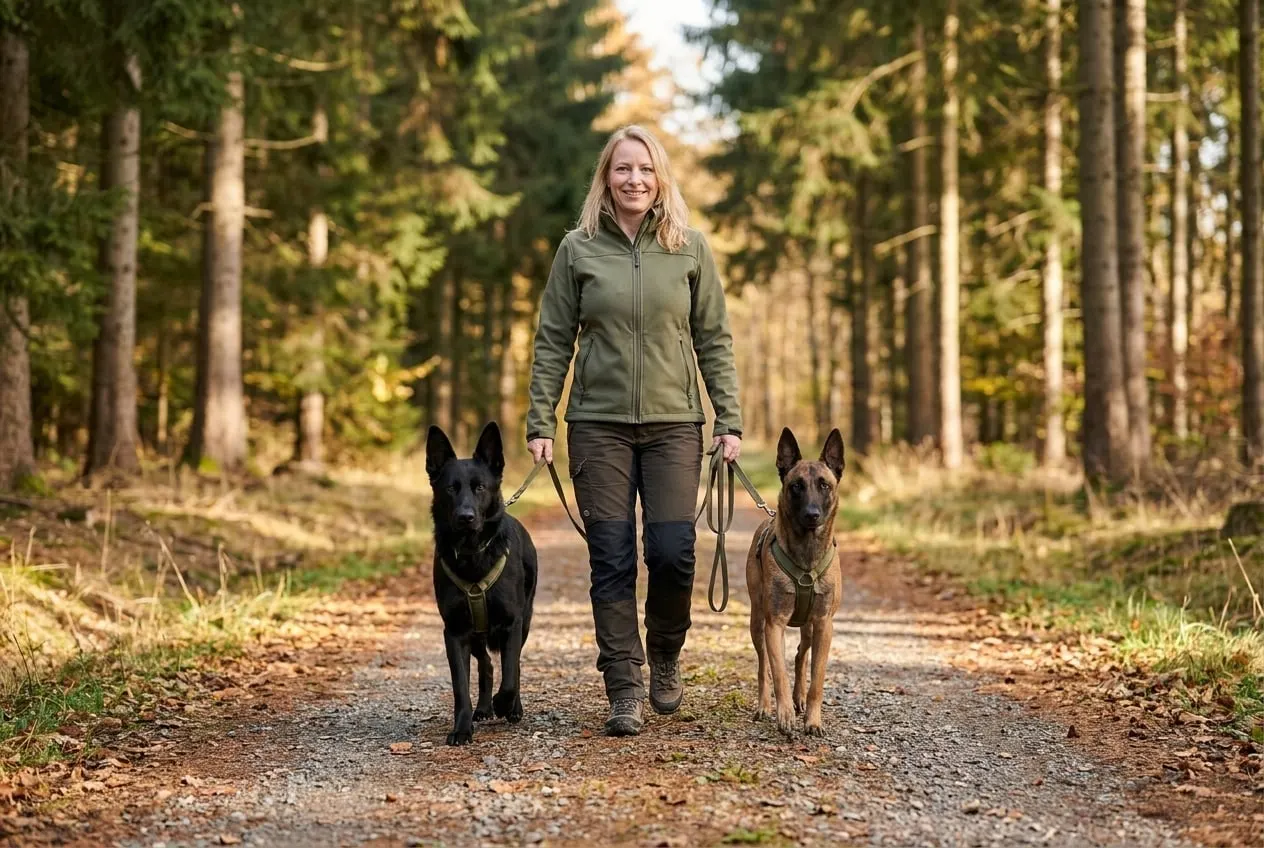
Our detection dog unit, led by Belinda Gereke, searches where aerial imagery does not give a clear answer. Two operational dogs work in the field and a young dog is in training. Each dog is conditioned to specific targets and gives a passive indication by sitting or lying down.
How we carry out this service.
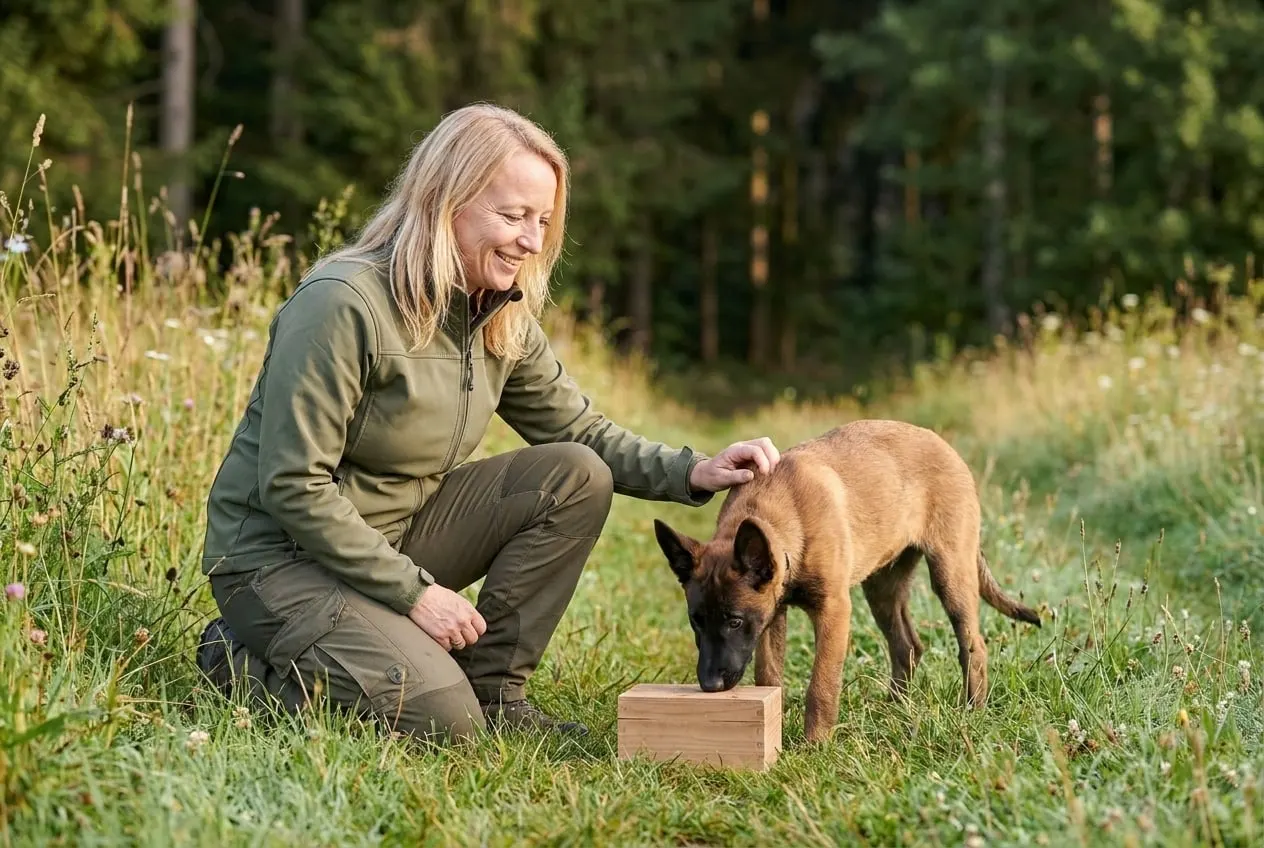
01The unit operates from the Rhön field station near Fulda. Belinda Gereke leads the unit and is responsible for the training and testing of the operational dogs Havanna and Dina. The young dog Apex accompanies deployments to become accustomed to them and trains daily on boring-dust samples. He will only be deployed after passing his performance test.
02Every search begins with a briefing on the area, the wind and the target. Dogs search into the wind in sections of 30 to 45 minutes, followed by a break. A GPS collar records the search route, so that searched and omitted areas are visible in the record. Every indication is checked and documented with a photo.
03Searches only take place with the consent of, or on behalf of, the landowners and in coordination with the hunting tenants. In doing so, we work closely with hunting tenants, hunters and farmers from the region. In restricted zones, vehicles, equipment and dogs are cleaned and disinfected as instructed by the veterinary authority.
Operating in Germany and the EU
e.g. 500 to 2,000 ha restricted zone
Veterinary office or district authority, Germany
Carcass search with thermal drone and detection dog over several weeks. Finds are located, reported and recovered as instructed by the authority.
e.g. 20 to 80 km of transects
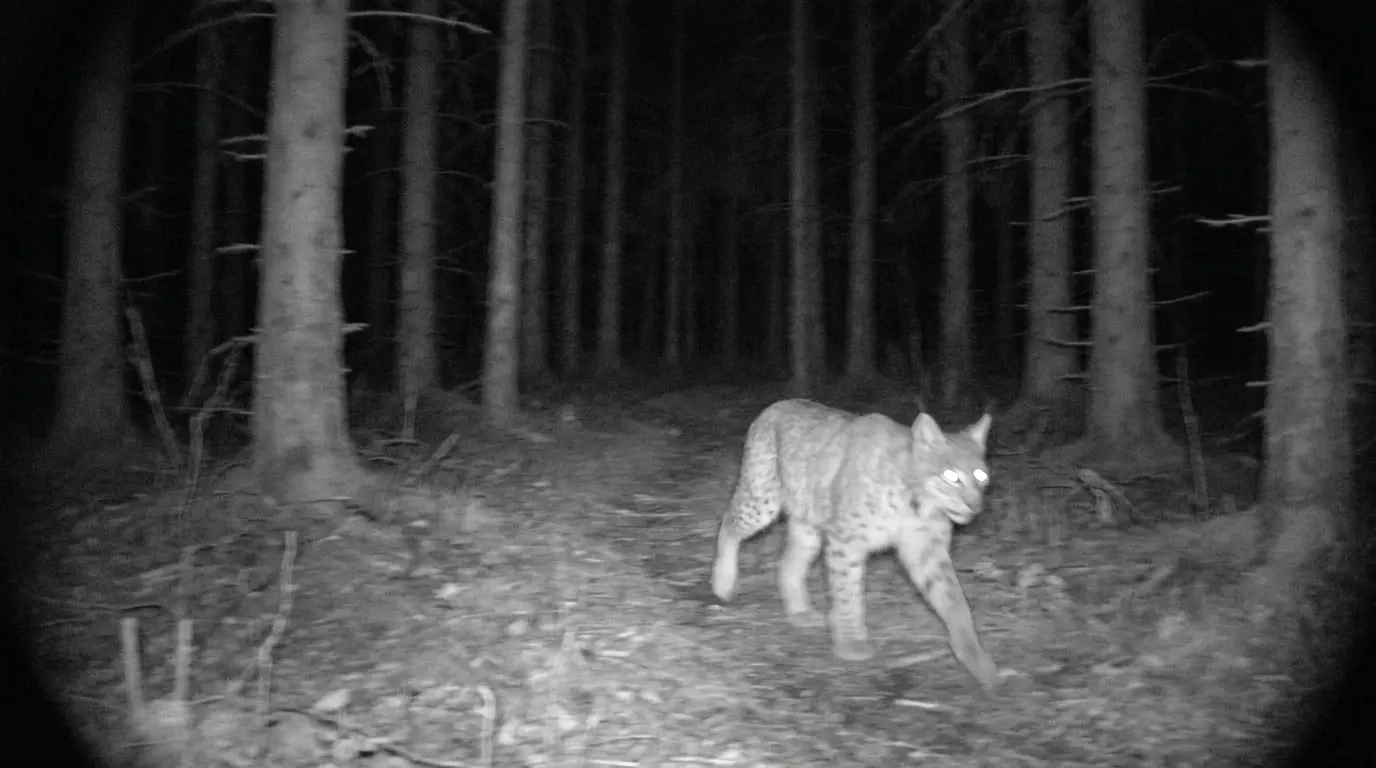
Local nature conservation authority, Rhön and eastern Hesse
Scat search for wildcat and lynx. Samples are secured, chilled and handed over to a specialist laboratory for genetic analysis.
The examples show typical procedures for this service.
Depending on temperature and terrain, 30 to 45 minutes at a time, after which the dog needs a break. Above 25 °C we move deployments to the early morning.
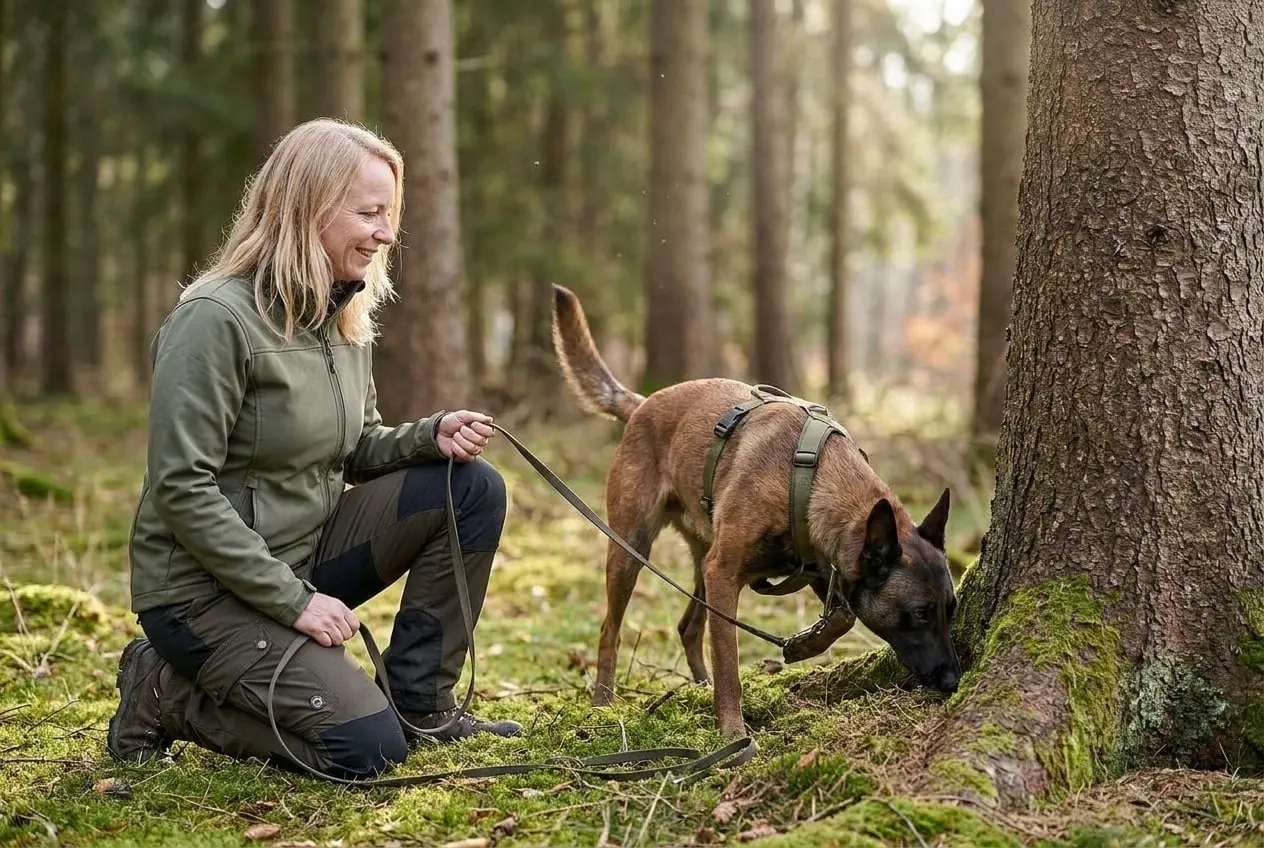
The dogs search areas that the thermal drone cannot see into, such as thickets. They indicate a find without touching it. Recovery follows the instructions of the authorities.
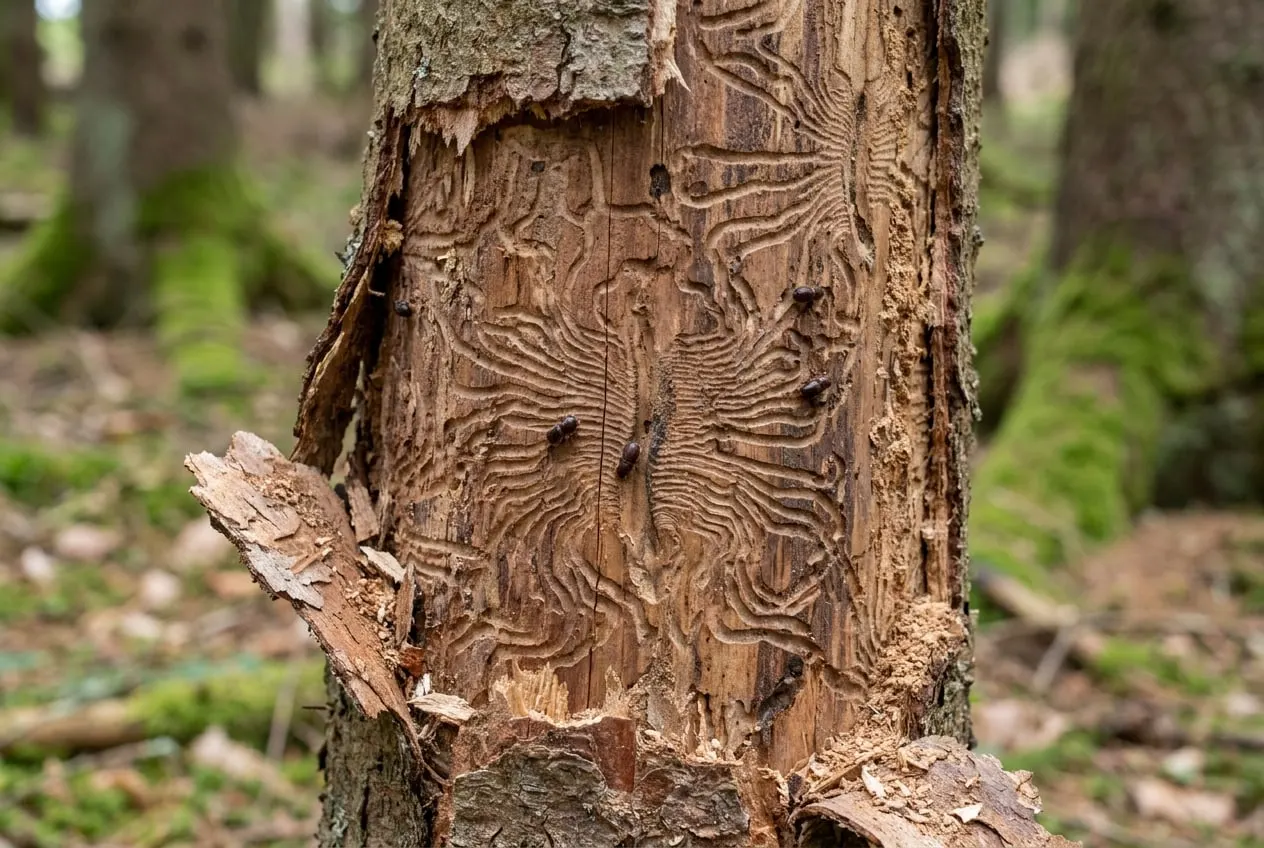
Reliability depends on training, weather and terrain. We therefore verify every indication by visual inspection of the stem and document the search conditions. The dogs complete performance tests regularly.
Tell us the area, location and time frame. You will receive an assessment within two working days.