
In the field
Access, identification and rules in the field
Our flight, field and detection dog teams work in forests and on farmland throughout Germany every week. This page explains the legal basis on which we use forest roads, how our teams are identified and which rules apply during deployments.
BWaldG · BNatSchG · EU 2019/947
For farmers, forest owners and residents
You met us on your land?
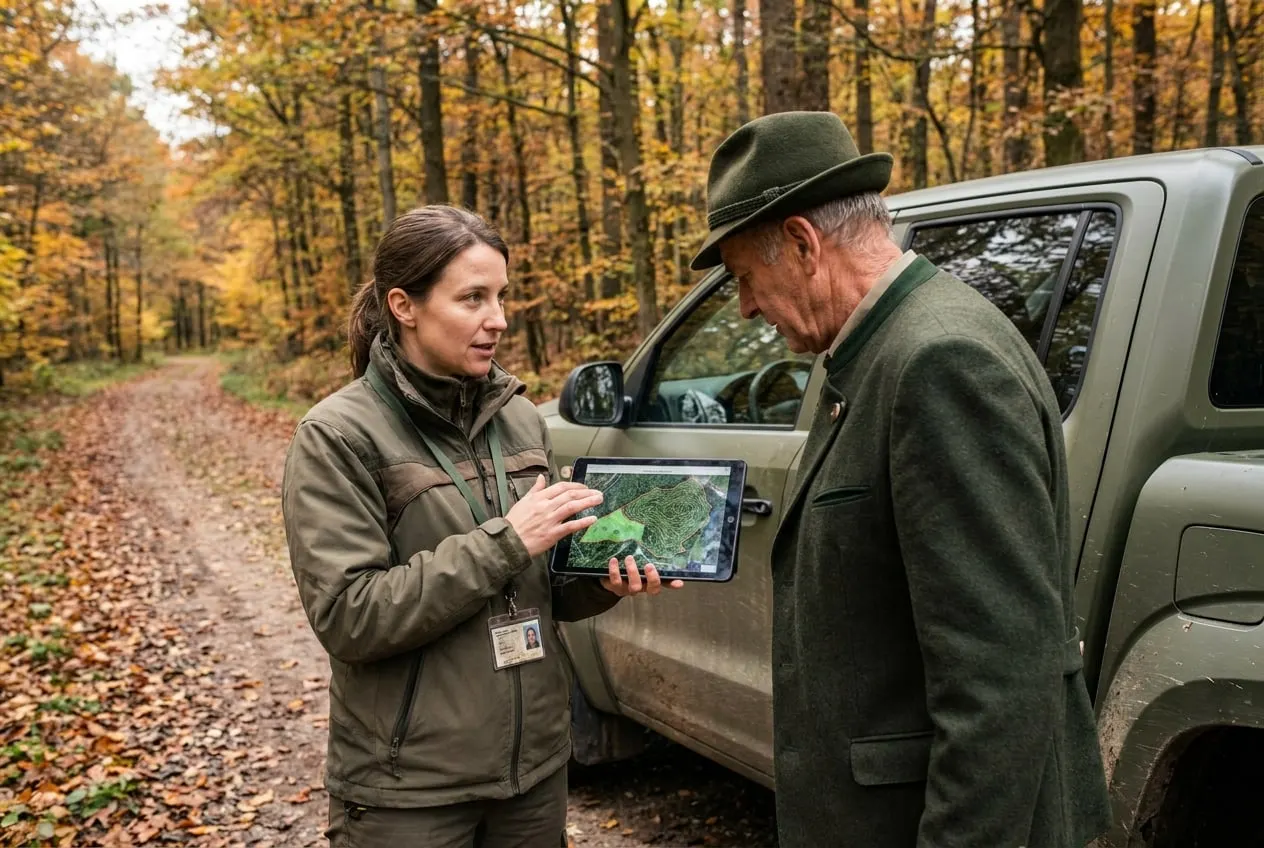
Our teams work in forests, meadows and along field margins every day. This is a normal part of our assignments. Feel free to talk to us: everyone in the field can tell you straight away what they are doing, for whom and on what legal basis.
01
Field ID
Field ID with photo, name and ID number.
02
Assignment
Assignment number, client, area and period in writing.
03
Verify
Check the assignment number online or ask us.
The legal basis for our presence on your land
| Entering forests on foot | § 14 Federal Forest Act and the respective state forest law; in the Rhön tri-state area: Hessian, Bavarian (Art. 13) and Thuringian forest acts | Coordination with owner or district forester |
|---|---|---|
| Meadows and open countryside | § 59 Federal Nature Conservation Act: paths and unused land | Farmed meadows and fields only with the farmer’s consent |
| Driving on forest roads | Permission of the forest owner under the respective state forest law | Prior coordination with district forester and hunting tenant |
| Official forest surveys | § 41a Federal Forest Act: toleration of surveys | Only for assignments by public authorities |
| Drone flights | EU Regulation 2019/947 and German Air Traffic Order | No flights over residential plots without consent |
| Animal disease outbreaks | Orders of the veterinary authority under the Animal Health Act | Carcass searches only within the designated zone |
Assignments elsewhere in Europe: rights of access
Access to forest and countryside is regulated separately in each country. For surveys we additionally obtain the owner’s consent; drone flights are governed EU-wide by Regulation 2019/947.
| Austria | § 33 Forest Act 1975: access to forests for recreation |
|---|---|
| Switzerland | Art. 699 Civil Code: access to forest and pasture |
| Czechia | § 19 Forest Act (Act No. 289/1995 Coll.): access to forests |
| Sweden | Right of public access (Allemansrätten), Instrument of Government ch. 2 |
| Finland | Everyman’s right (Jokamiehenoikeus) |
| Denmark | Nature Protection Act (Naturbeskyttelsesloven), access to forests |
| Other EU member states | Respective national forest and nature conservation law, owner’s consent |
Any crop or land damage is documented on site and settled through our liability insurance.
Access permit
Legal basis for using forest roads
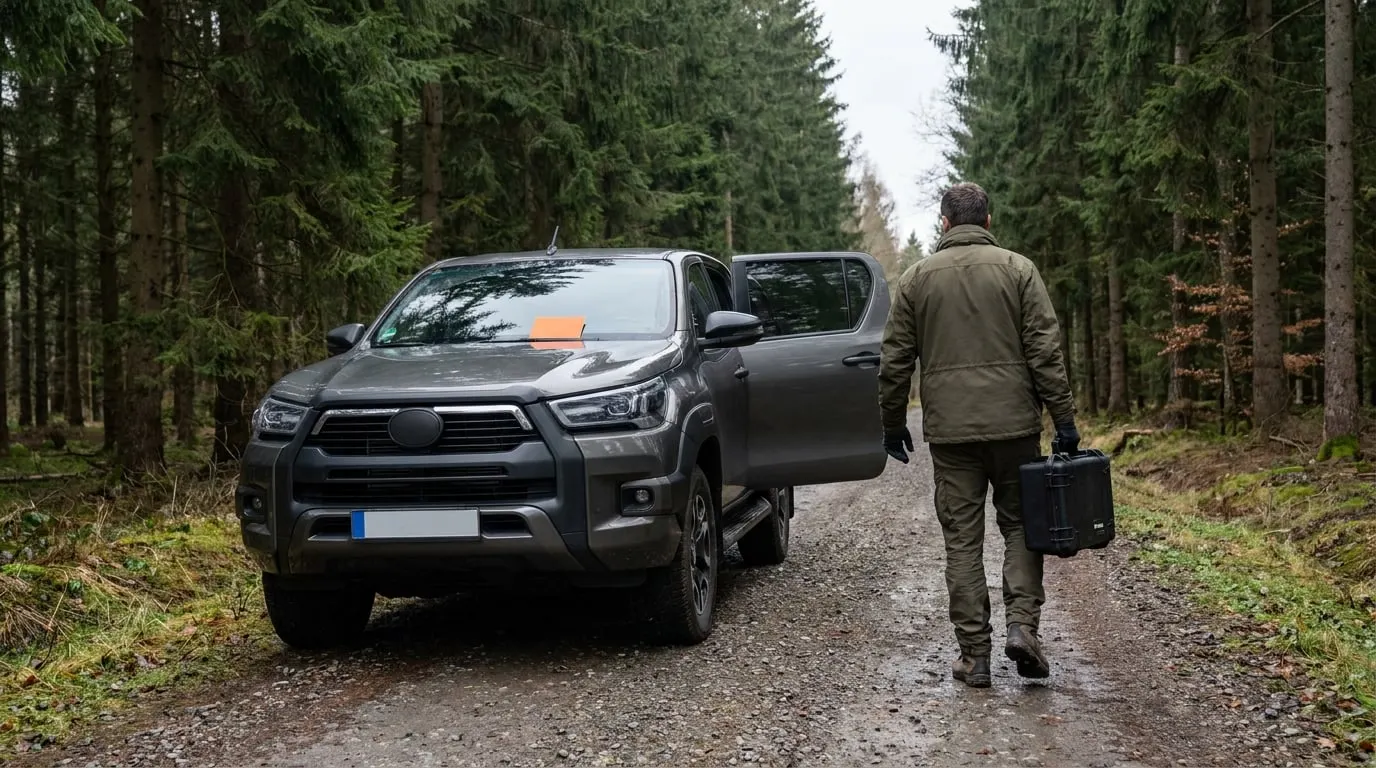
Driving on forest roads is generally restricted by the state forest laws and only permitted with authorisation. We therefore work exclusively on behalf of or with the consent of those entitled on site: forest owners, hunting district holders, hunting tenants and farmers.
Assignment and consent
Every assignment is based on a commission or the consent of the forest owner or farmer. Permission from the owner is obtained for driving on forest roads; official surveys are carried out only on behalf of public authorities.
Network of hunters and farmers
We work closely with a large network of hunting tenants, hunters and farmers in the region, so access routes, quiet zones and hunting dates are known and agreed before every assignment.
Notification of the district forester
Every assignment is reported to the responsible district forester and, where applicable, the holders of hunting rights at least 48 hours in advance. During calamities, the notice period is reduced to 24 hours.
Europe
Assignments elsewhere in Europe on request
EU drone regulation 2019/947 applies in all member states. Our operational authorisation in the specific category is recognised in the destination country after notification of its aviation authority. Vehicles, trailers and dog boxes travel with the team, and the sample chain remains complete all the way to the accredited partner laboratory.
AustriaSwitzerlandCzechiaPolandNetherlandsBelgiumLuxembourgDenmarkSwedenFinlandEstoniaSlovakia
Detection dogs
Deployment of the detection dog unit
Detection dogs check on the ground what the aerial analysis has delineated as suspect. They find fresh boring dust, carcasses or scat even where cameras have no view: beneath the canopy, in thickets and at the stem base. Every search follows a defined procedure.
- 1Assignment order and coordination with the district forester and holders of hunting rights
- 2Coarse search of the suspect area from the aerial analysis
- 3Fine search and passive indication at the find location
- 4Location fix, photographic documentation and sampling where required
- 5Handover of find record, GPS track and samples to the client and laboratory
K9 · Verdavis
Havanna
Belgian Shepherd (Malinois)
Bark beetles (boring dust) and carcasses during animal disease outbreaks
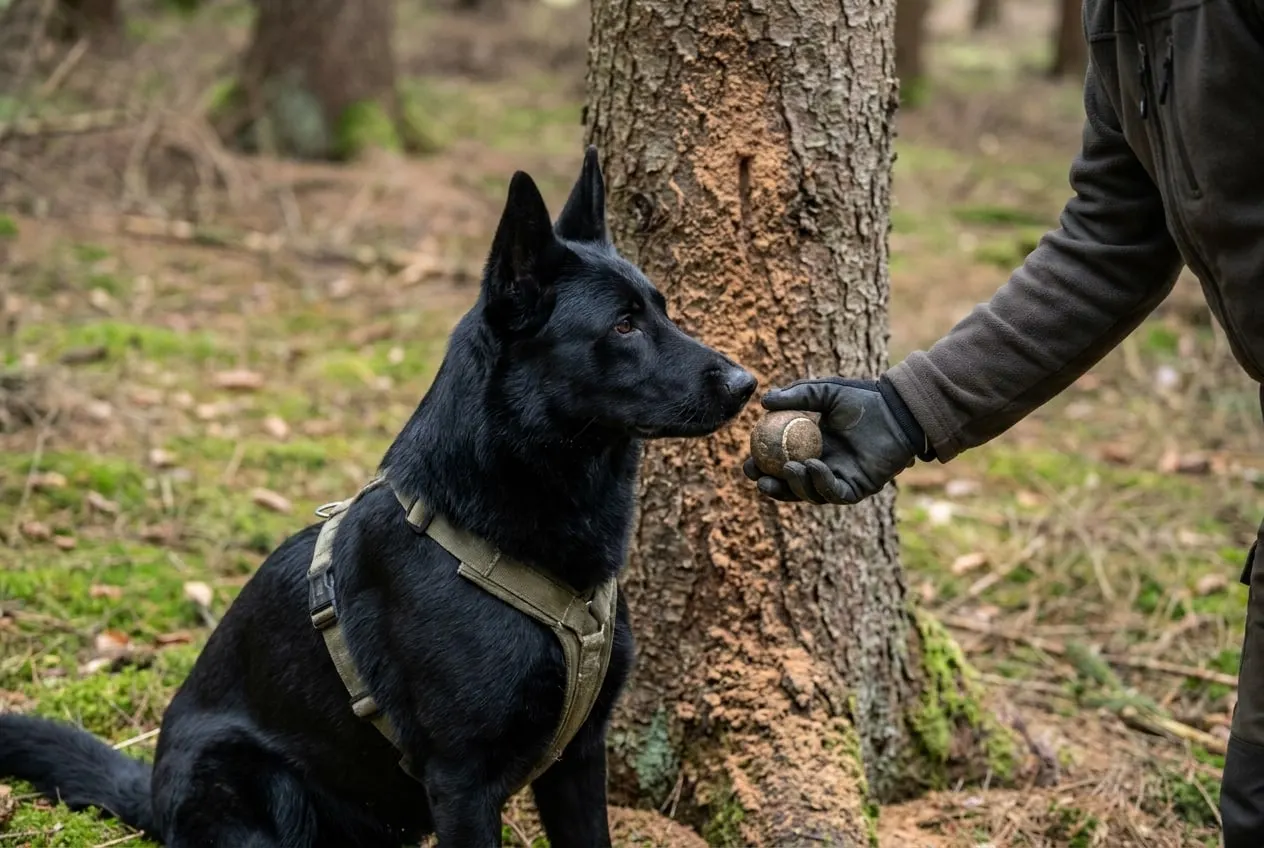
K9 · Verdavis
Dina
German Shepherd, black
Bark beetles, quarantine pests and scat for species monitoring
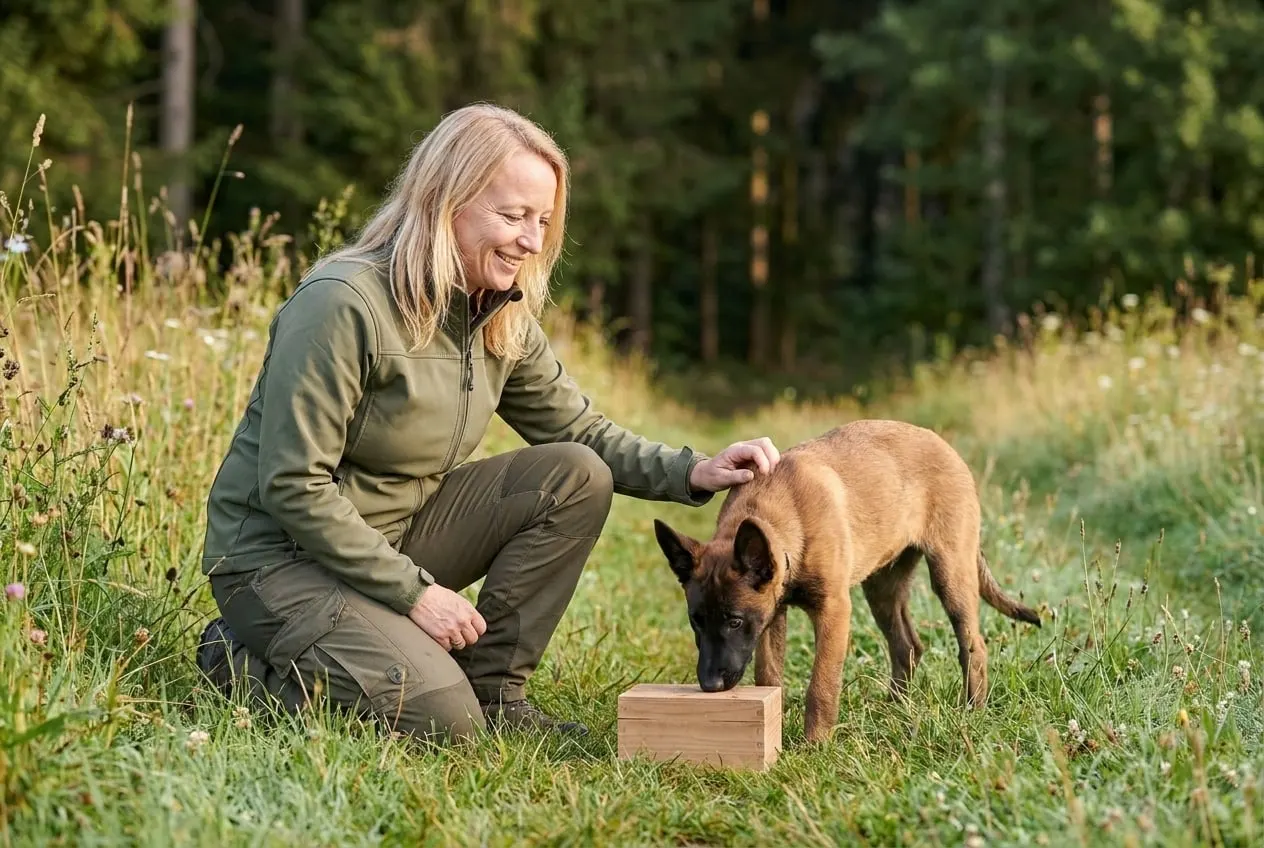
K9 · Verdavis
Apex
Belgian Shepherd (Malinois), young dog
In training: scent imprinting on boring dust
Deployment rules
- Search phases of 30 to 45 minutes per dog, followed by a break of at least 15 minutes; no more than four hours of search work per day.
- Above 25 °C air temperature, searches take place only in the early morning and evening. Deployments are suspended in storms, heavy rain or at fire danger levels 4 and 5.
- The search direction is set according to wind and terrain, working into the wind wherever possible.
- During the breeding and rearing season, dogs search only after coordination with the district forester and only on a long line.
- Every search is recorded as a GPS track with duration, temperature and wind direction and handed over to the client.
- An indication only counts as a finding once it has been confirmed by visual inspection (boring dust, entry holes) or laboratory analysis.
Field ID
How to recognise us
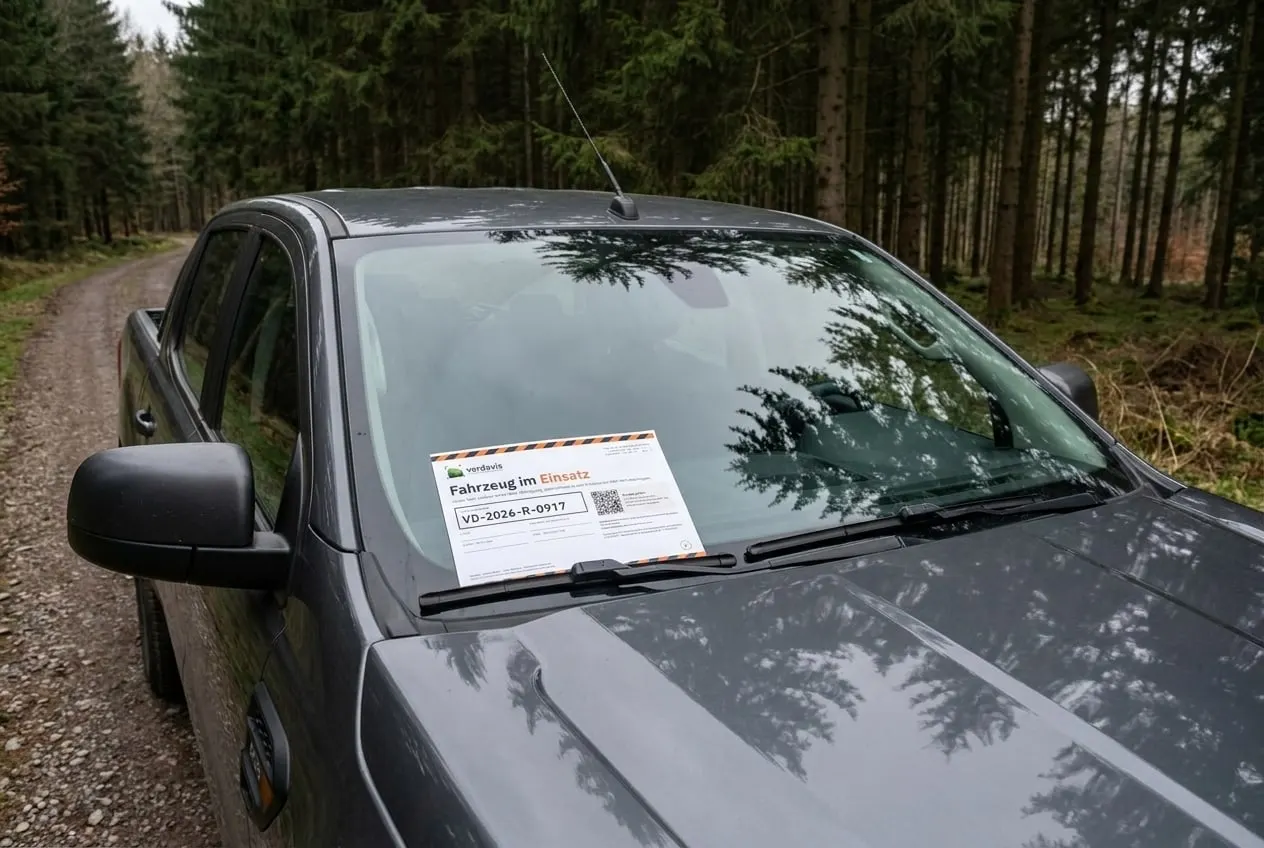
- Changing, often rented vehicles without lettering, identifiable by the assignment sheet behind the windscreen
- Everyone in the field carries a personal field ID with photo
- Every assignment comes with a written order and an assignment number
- Teams always work in pairs and are connected to headquarters via emergency tracking
 verdavis FIELD ID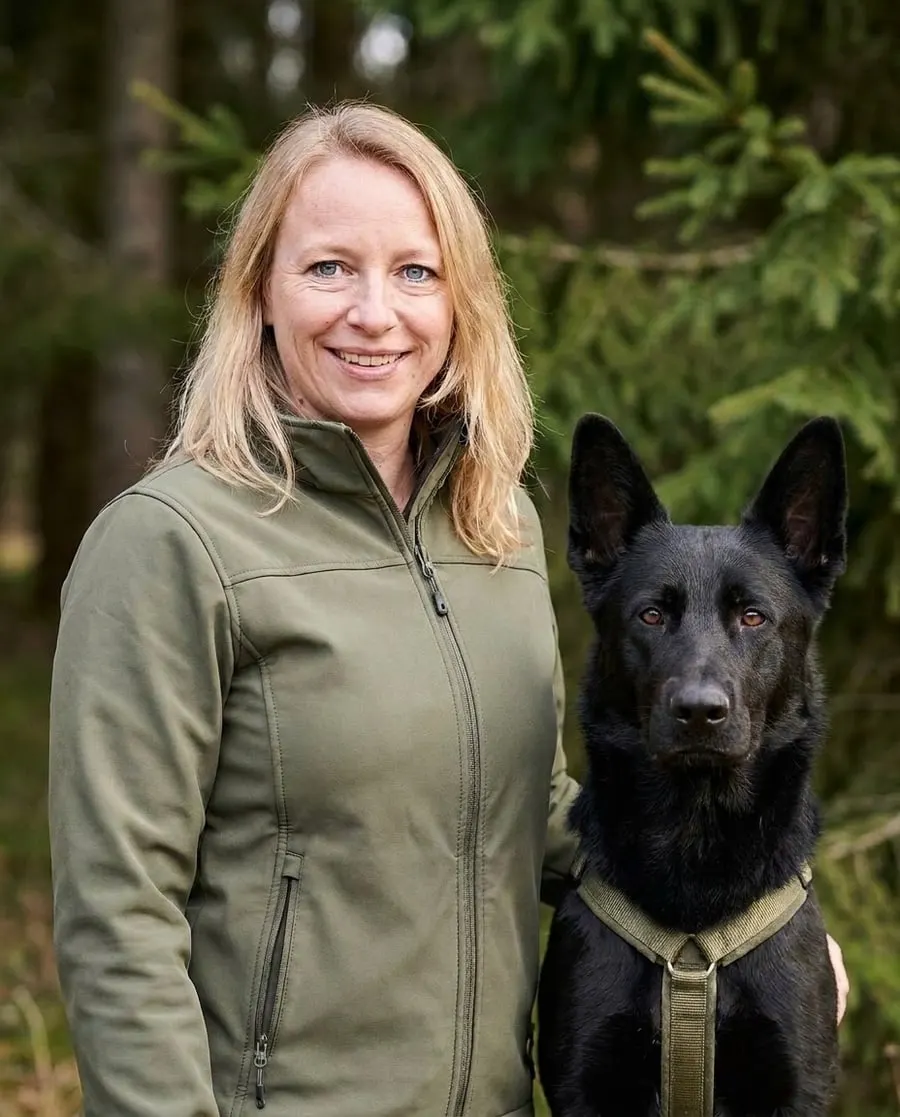
- NAME
- Belinda Gereke
- ROLE
- Head of detection dog unit
- ID NO.
- VD-SH-0107
- VALID UNTIL
- 12/2027
Working on behalf of or with the consent of forest owners, hunting district holders and farmers. Valid only with a field assignment.
Check assignment number
Check a Verdavis vehicle assignment
The sheet number is printed on the assignment sheet behind the windscreen (format VD-EB-R-0000). You can check here whether an assignment has been registered.
If no assignment is found or you notice anything unusual, please write to us at kontakt@verdavis.com.
Rules in the field
Code of conduct for our teams
R-01
Speed
On forest roads we drive at no more than 20 km/h, and at walking pace near pedestrians and cyclists.
R-02
No skid trails
Skid trails and stands are not driven on. Beyond the forest road, teams work on foot.
R-03
Forest fire risk
From fire danger level 4, we only drive with express approval from the forest authority.
R-04
Breeding season
From April to July we avoid quiet zones and fly outside sensitive areas.
R-05
Rescue points
Every assignment is planned with the nearest forest rescue points.
R-06
Logbook
All journeys are recorded by GPS and disclosed to the client on request.
R-07
Dogs on duty
Our detection dogs are trained to ignore game, work on a long line and only search with a written assignment order and after coordination with the holders of hunting rights.
Resources
3
detection dogs: Havanna, Dina and young dog Apex
2
drones: DJI Mavic 3 and Mavic 3 Thermal
31
staff and freelancers
13
partner laboratories in Europe
Partners
Who we work with
We coordinate our assignments with the people who farm, manage and hunt the land, working with a large network in the region.
HUNTING
- Hunting tenants and district holders
- Local hunters
- Hunting cooperatives
AGRICULTURE
- Farmers and land managers
- Agricultural businesses
- Forest owners
ANALYSIS
- 13 accredited partner laboratories in Europe
- Sampling by our field teams
- Analysis to DIN EN ISO/IEC 17025